The Second-quarter Feminist Manifesto
This article is my final personal theoretical response essay for GWS 444 at UW-Madison, lectured by the best lecturer ever, Dr. Kate, in the 2025 Fall.
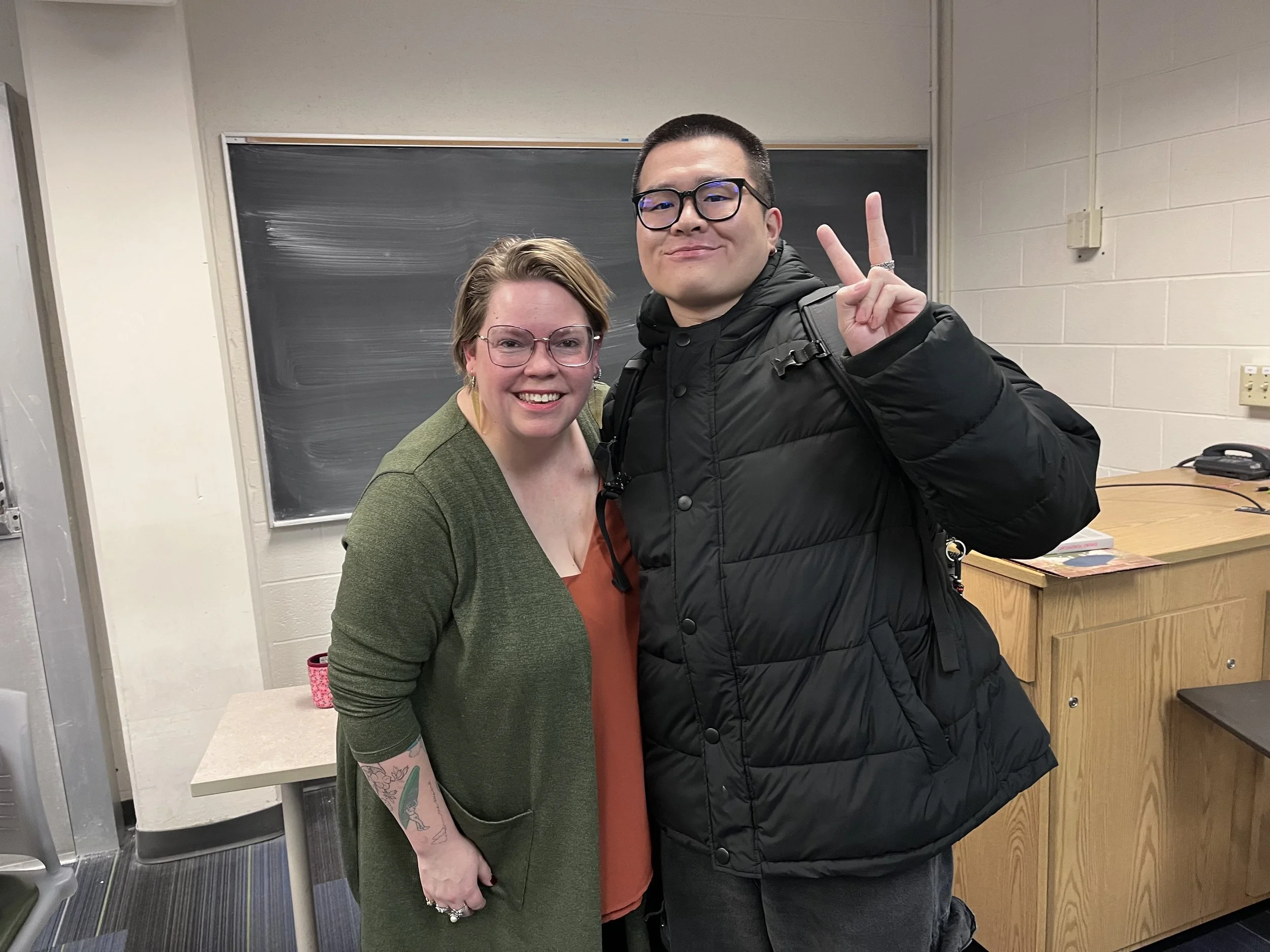
Dr. Kate and I (at the last meeting of GWS 444 on December 9, 2025).
I sincerely appreciate her passionate teaching. She showed me how to be a feminist sociologist teaching at a prestigious university through her teaching and embodiment. I owed her a short novel of how great she is and how much she has impacted my life. I used to learn feminism on my own, but she showed me the power of learning together, even though we’d already read those works. I want to dedicate this manifesto to the one who got me here, as a better feminist, my dearest Dr. Katherine Phelps.
In my diary, I will write down my daily schedule with an additional column named “Why.” This column makes me think of why I would like to do this task at this time. Every Tuesday and Thursday, 09:30 am t0 10:45 am, I’ll write down “GWS444 Meeting.” As I showed her in our last class, I want to attend because of her. I wrote down “I love Dr. Kate. She is the best.” in different ways several times this semester.
The Second-quarter Feminist Manifesto[i]
Dion Dung-Shiu Yu
The first, and the most crucial part to live as a feminist in the second quarter of the 21st century is to be alive. Feminism needs those of us who live lives as feminists to survive[ii]. Feminism won’t die as long as there are still people in the world who identify themselves as feminists. Life could be tough, especially when you are a feminist. To live for a revolution is more difficult than to die for it[iii]. Hence, to be alive is our priority as feminists in the second quarter of the 21st century.
If you want to live in the world, you need to live with something. To be a second-quarter feminist, you need to be conscious of everything you’re living with.
You live with your body and vision, which are exceptional and irreplaceable. Your world unfolds around your body. Your visual and visceral experiences are where your feminist politics originated. Your vision will impact your understanding of the world and your understanding of yourself, your identity. Our politics comes from our identity[iv] and embodied knowledge of the world. Hence, we need to form communities to find a larger vision[v], based on which we navigate our political actions.
You live with the society around you. How the world around us has been structured matters, since it will influence what is reachable for us[vi]. What is reachable includes power and resources (like materials and social relations) that are within our reach and maneuverable for us, given our physical, mental, and intellectual condition[vii]. Our desires (for other creatures or for social justice) are inevitably social, mediated by social arrangements and by different people and their interests[viii]. Our personal characteristics are undoubtedly social, since it’s humans and their societies that have determined the division between “public/private” and “social/natural[ix].” In addition, the definitions of femininity[x], female sexuality[xi], and gender[xii] have been constituted by a series of knowledge, beliefs, and personal or institutional practices, which established a meticulous net of meaning and (formal and informal) norms, helping us make sense of our worlds and guide our daily lives[xiii]. Social arrangements have profoundly influenced who we are, what we want, and, of course, who we love[xiv].
Former feminists have proved in various ways that the world surrounding us has been structured in a way that benefits cisgender, heterosexual, middle-class, white, highly educated, able-bodied men from a well-developed country, which has never been colonized before. Their experiences and interests are more visible and can be served. Thus, the status quo of our society is unjust, as it favors people whose lives resemble the characteristics listed above, giving them greater power over others. To live as a feminist in the second quarter of the 21st century, we need to dismantle social arrangements that reinforce this unequal status quo. Hence, feminist projects should be political projects that could lead us to a more just society[xv]. Any project that claims to be feminist but is either apolitical or reconciling the status quo[xvi]should be rejected by the second-quarter feminists.
The second-quarter feminists live with both human and nonhuman lives. As humans, our lives are inevitably dependent on others. The myth of independence is just a neoliberal tactic, asking us to be responsible for ourselves on our own[xvii], which is impossible. Interdependence is a miracle thing. We must live. And we must live together. Hence, to be a second-quarter feminist, we need to be conscious about our environment. Since the Industrial Revolution, the health of our planet has worsened and worsened. The release of carbon dioxide and other greenhouse gases has raised Earth's temperature, making the planet uninhabitable for several species that have gone extinct. The ongoing deforestation has destroyed the habitats of thousands of species. Hence, to be second-quarter feminists, we need to live an eco-friendly life so others can live. Living is the key to the second-quarter feminism: we need to live. We need others, including humans and nonhumans, to live. We need others to make history continue[xviii]. Hence, we need to find a way to live together, to live with each other. We need to build an equal and reciprocal relationship with other humans and nonhumans to live together.
The second-quarter feminists live in their era, from 2025 to 2050. We are physically situated in the world while simultaneously temporally located in it. We need to be aware of our histories, our present, and our future. The second-quarter feminists are historicized, remembering past oppression and resistance. No matter how crude the histories are, we must not forget them. We remember the history of slavery in the U.S.; we remember the crudity of Nazi Germany, Francisco Franco, Syngman Rhee, Park Chung-Hee, Chiang Kai-Shek, Chiang Ching-Kuo, and the Ditadura Militar Brasileira. The colonial and settler-colonial histories will always be in our minds. To remember is not because of hate; in contrast, it’s because of love. We love our people, our lands, our cultures, our seas, and everything around us. Hence, we will not let them be taken away from us again. Feminists are fighting for love. Feminists are fighting because of love.
The second-quarter feminists live in the era of the vanguard technologies, enjoying the sweet fruit of technological development. We can’t undo the development of AI technologies, but we can navigate in the era of high technology. Technologies have already woven into our bodies and social lives. The second-quarter feminists must be those cyborgs[xix] with critical minds. We critically examine the process of development, excavating the hidden relationships of oppression. We navigate our relationships with new technology, through which process, the ethical relationship between human and technology has been challenged, revised, and redefined. AI may not be a feminist in the first place, but it needs users to survive. We, the second-quarter feminists, are users. Hence, our feminist engagement with AI could change its way of being through our interdependent relationships. If a technology is not feminist by default, what we could do is use it, engage in its survival, and then change it, or at least, make some interruption[xx]! The spirit of engagement and interruption is also applicable for our lives in global capitalist, neo-colonial, imperialist, authoritarian, war-tortured worlds, to name just a few.
Finally, for feminist politics, there are two essential rules that feminists with zeitgeists should keep in mind. The first rule is democracy. Democracy might not be the most efficient way to solve social problems, but it is an effective way to ensure the voices of the powerless are heard. Powerful people’s voices are dominant regardless of whether in a democratic or an autocratic society. Thus, when we’re considering social institutions, our question should be: what kind of institutional design could make the voices of marginalized people heard?
Then, always remember the power of coalitions. The second-quarter feminists need to build collectives among heterogeneous people, locally and transnationally[xxi]. Only within the interdependence of different strengths can the power to seek a new way of being in the world[xxii]. To be a feminist in the second quarter of the 21st century is to survive. Survival is not an academic skill. It’s learning how to take our differences and make them strengths, for the master’s tool will never dismantle the master’s house[xxiii]. You don’t go into coalition because you just like it: the only reason you would consider trying to team up with somebody who would possibly kill you, is because that’s the only way you can figure you can stay alive [sic][xxiv]. With coalitions, we are going to turn the century.
Reference
Ahmed, Sara. 2006. “Orientation: Toward a Queer Phenomenology.” GLQ: A Journal of Lesbian and Gay Studies. 12(4): 543-574.
Ahmed, Sara. 2017. Living a Feminist Life. Durham: Duke University Press.
Beal, Frances. 1970. “Double Jeopardy: To Be Black and Female.” In Breanne Fahs (eds). 2020. Burn It Down! Feminist Manifestos for the Revolution. Pp. 281-292. Brooklyn and London: Verso.
Butler, Judith. 1990. Gender Trouble: Feminism and the Subversion of Identity. New York and London: Routledge.
Butler, Judith. 2024. Who’s Afraid of Gender? London and New York: Allen Lane.
Combahee River Collective. 1977. “The Combahee River Collective Statement.” In Breanne Fahs (eds). 2020. Burn It Down! Feminist Manifestos for the Revolution. Pp. 271-280. Brooklyn and London: Verso.
de Beauvoir, Simone. 1949. “Introduction.” In her book The Second Sex. Translated and edited by H. M. Parshley. 1953. London: Jonathan Cape.
Gates, Barbara T.. 1996. “A Root of Ecofeminism: Ecoféminisme.” Interdisciplinary Studies in Literature and Environment. 3(1): 7-16.
Geertz, Clifford. 1973. The Interpretation of Cultures: Selected Essays. New York: Basic Books.
Haraway, Donna. 1988. “Situated Knowledges: The Science Question in Feminism and the Privilege of Partial Perspective.” In Carloe McCan, Seung-kyung Kim, and Emek Ergun (eds.) 2021. Feminist Theory Reader: Local and Global Perspectives. (fifth edition) pp. 303-310. New York and London: Routledge.
Haraway, Donna. 1991. Simians, Cyborgs and Women: The Reinvention of Nature. New York: Routledge.
Lorde, Audre. 1984. “The Master’s Tools Will Never Dismantle the Master’s House” in her Sister Outsider: Essays and Speeches. Pp. 110-113. Berkeley: The Crossing Press.
MacKinnon, Catherine A.. 1989. Toward a Feminist Theory of the State. Cambridge: Harvard University Press.
McRobbie, Angela. 2004. “Post-feminism and Popular Culture.” Feminist Media Studies. 4(3): 255-264.
Olufemi, Lola. 2020. “Introduction: Feminist work is justice work.” In their book Feminism, Interrupted: Disrupting Power. Pp. 1-9. London: Pluto Press.
Reagon, Bernice Johnson. 1981. “Coalition Politics: Turning the Century.” In Barbara Smith (eds.) 1983. Home Girls: A Black Feminist Anthology. Pp. 343-355. New York: Kitchen Table—Women of Color Press.
Spivak, Gayatri. 1988. “Can the Subaltern Speak?” in Patrick Williams and Laura Chrisman (eds.). 1993. Colonial Discourse and Post-colonial Theory: A Reader. Pp. 66-111. London and New York: Routledge.
Wendell, Susan. 1989. “Toward a Feminist Theory of Disability.” Hypatia 4(2): 104-124.
Ennote
[i] I know Dr. Kate prefers us to use the ASA citation system. But to make this article more readable and more like a manifesto, I will use ennotes to replace in-text citations, while still following ASA’s reference style at the end of the article.
[ii] Sara Ahmed. 2017. Living a Feminist Life. Durham: Duke University Press.
[iii] Frances Beal. 1970. “Double Jeopardy: To Be Black and Female.” In Breanne Fahs (eds). 2020. Burn It Down! Feminist Manifestos for the Revolution. Pp. 281-292. Brooklyn and London: Verso.
[iv] Combahee River Collective. 1977. “The Combahee River Collective Statement.” In Breanne Fahs (eds). 2020. Burn It Down! Feminist Manifestos for the Revolution. Pp. 271-280. Brooklyn and London: Verso.
[v] Donna Haraway. 1988. “Situated Knowledges: The Science Question in Feminism and the Privilege of Partial Perspective.” In Carloe McCan, Seung-kyung Kim, and Emek Ergun (eds.) 2021. Feminist Theory Reader: Local and Global Perspectives. (fifth edition) pp. 303-310. New York and London: Routledge.
[vi] Sara Ahmed. 2006. “Orientation: Toward a Queer Phenomenology.” GLQ: A Journal of Lesbian and Gay Studies. 12(4): 543-574.
[vii] Susan Wendell. 1989. “Toward a Feminist Theory of Disability.” Hypatia 4(2): 104-124.
[viii] Gayatri Spivak. 1988. “Can the Subaltern Speak?” in Patrick Williams and Laura Chrisman (eds.). 1993. Colonial Discourse and Post-colonial Theory: A Reader. Pp. 66-111. London and New York: Routledge.
[ix] Donna Haraway. 1991. Simians, Cyborgs and Women: The Reinvention of Nature. New York: Routledge.
[x] Simone de Beauvoir. 1949. “Introduction.” In her book The Second Sex. Translated and edited by H. M. Parshley. 1953. London: Jonathan Cape.
[xi] Catherine A. MacKinnon. 1989. Toward a Feminist Theory of the State. Cambridge: Harvard University Press.
[xii] Judith Butler. 1990. Gender Trouble: Feminism and the Subversion of Identity. New York and London: Routledge.
[xiii] Clifford Geertz. 1973. The Interpretation of Cultures: Selected Essays. New York: Basic Books.
[xiv] Sara Ahmed. 2006. “Orientation: Toward a Queer Phenomenology.” GLQ: A Journal of Lesbian and Gay Studies. 12(4): 543-574.
[xv] Lola Olufemi. 2020. “Introduction: Feminist work is justice work.” In their book Feminism, Interrupted: Disrupting Power. Pp. 1-9. London: Pluto Press.
[xvi] Angela McRobbie. 2004. “Post-feminism and Popular Culture.” Feminist Media Studies. 4(3): 255-264.
[xvii] Susan Wendell. 1989. “Toward a Feminist Theory of Disability.” Hypatia. 4(2): 104-124.
[xviii] Barbara T. Gates. 1996. “A Root of Ecofeminism: Ecoféminisme.” Interdisciplinary Studies in Literature and Environment. 3(1): 7-16.
[xix] Donna Haraway. 1991. Simians, Cyborgs and Women: The Reinvention of Nature. New York: Routledge.
[xx] Lola Olufemi. 2020. “Introduction: Feminist work is justice work.” In their book Feminism, Interrupted: Disrupting Power. Pp. 1-9. London: Pluto Press.
[xxi] Judith Butler. 2024. Who’s Afraid of Gender? London and New York: Allen Lane.
[xxii] Audre Lorde. 1984. “The Master’s Tools Will Never Dismantle the Master’s House” in her Sister Outsider: Essays and Speeches. Pp. 110-113. Berkeley: The Crossing Press.
[xxiii] Audre Lorde. 1984. “The Master’s Tools Will Never Dismantle the Master’s House” in her Sister Outsider: Essays and Speeches. Pp. 110-113. Berkeley: The Crossing Press.
[xxiv] Bernice Johnson Reagon. 1981. “Coalition Politics: Turning the Century.” In Barbara Smith (eds.) 1983. Home Girls: A Black Feminist Anthology. Pp. 343-355. New York: Kitchen Table—Women of Color Press.